
Home / Exhibition
Curator
Co-Curator
Exhibition Partners
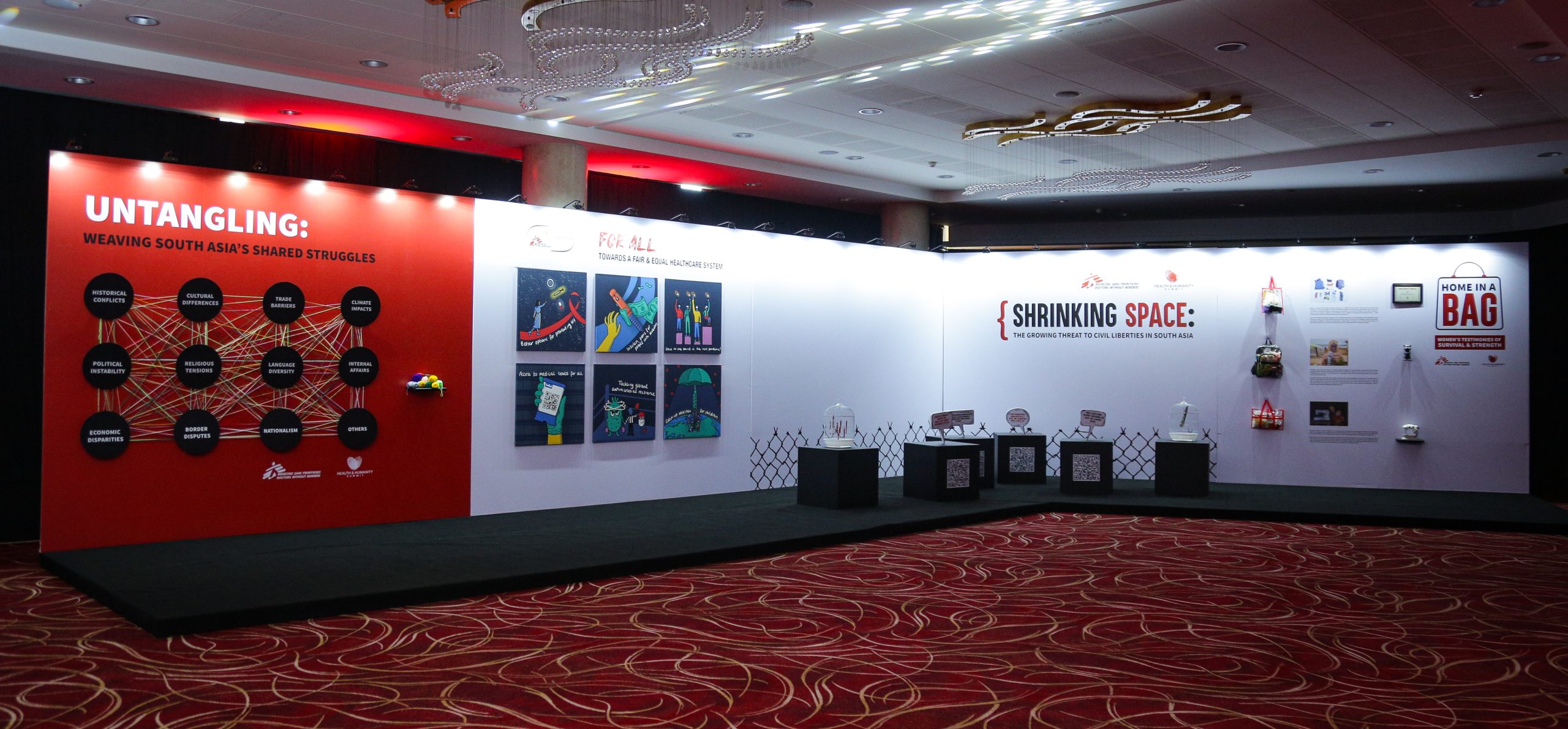
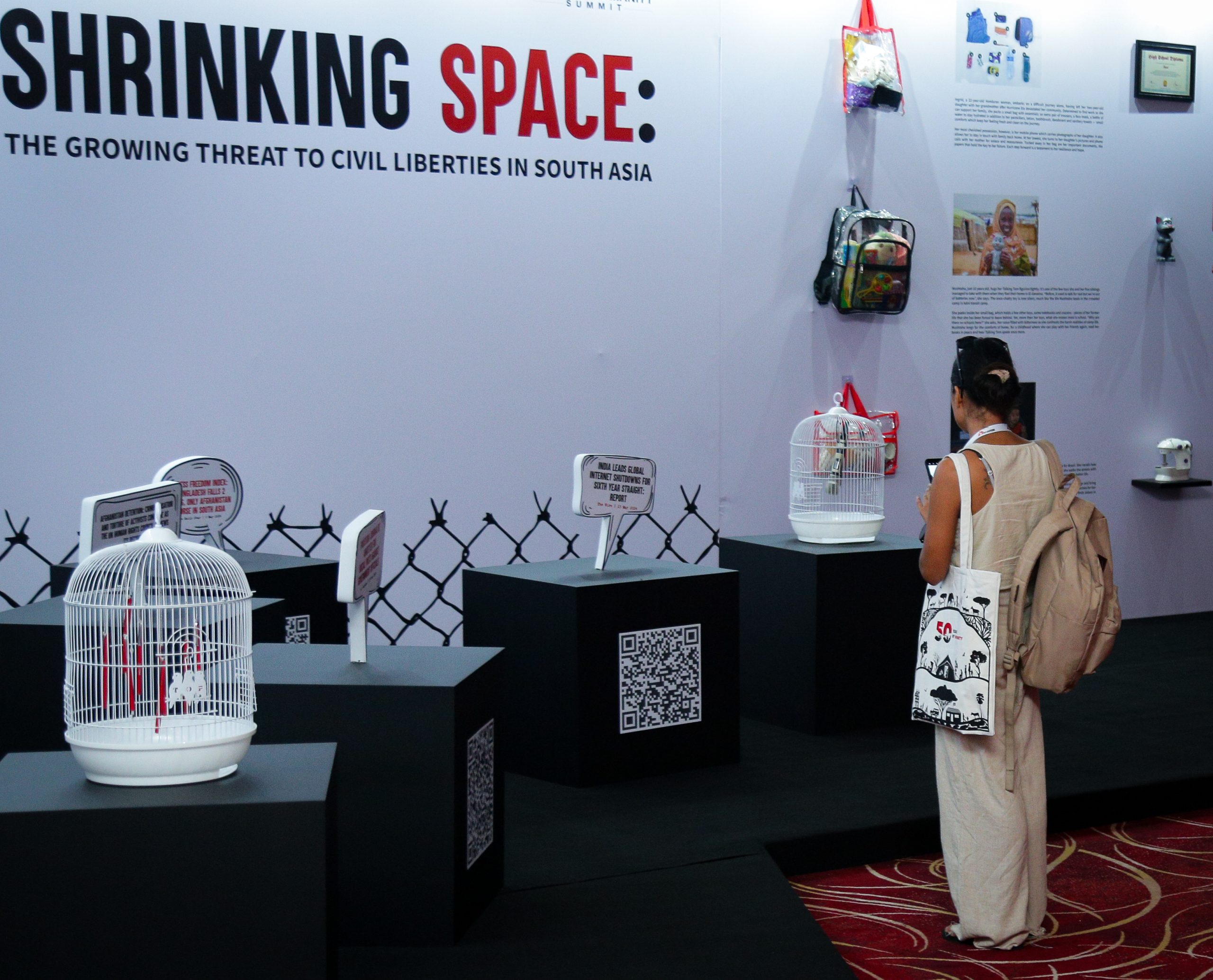
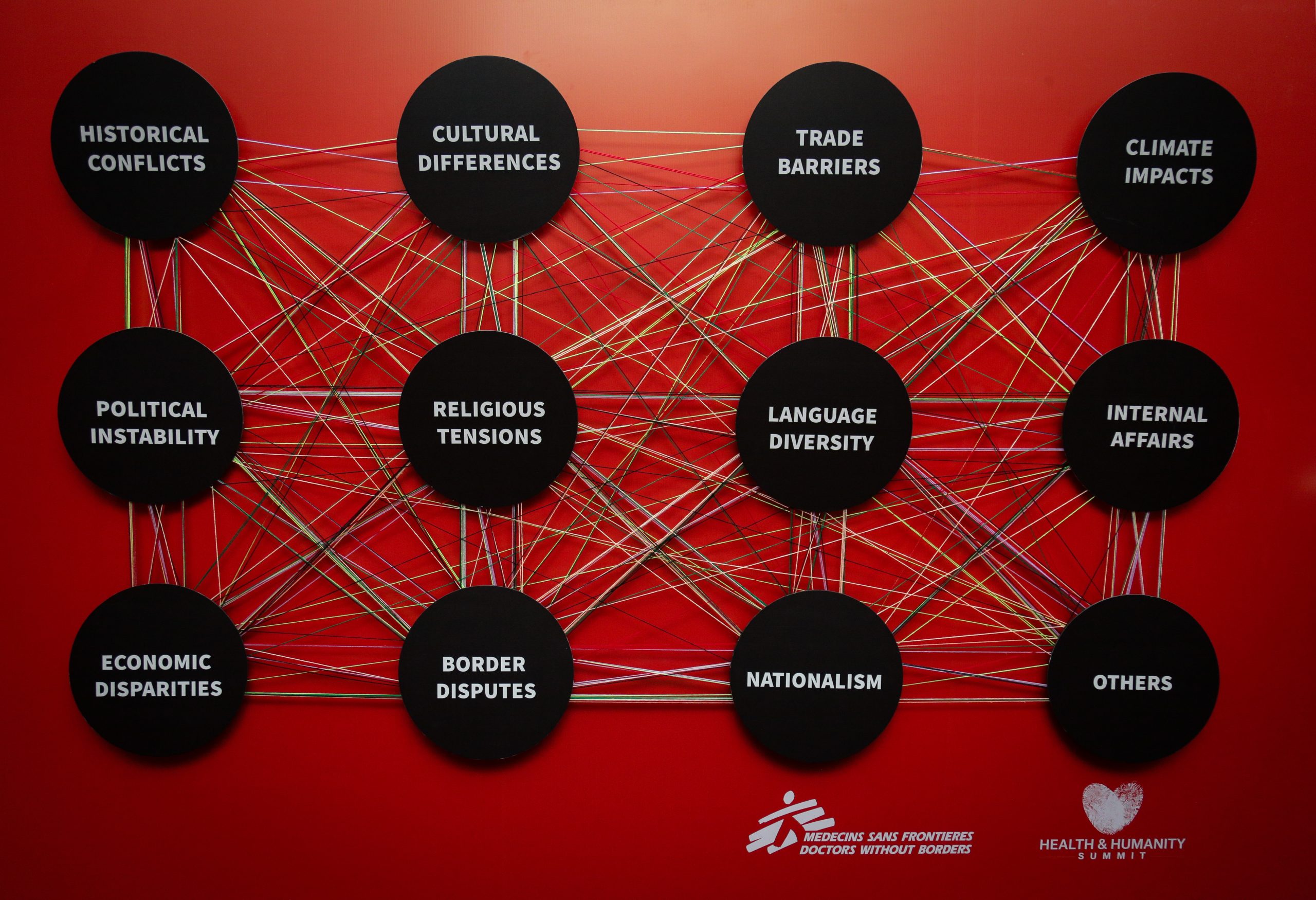
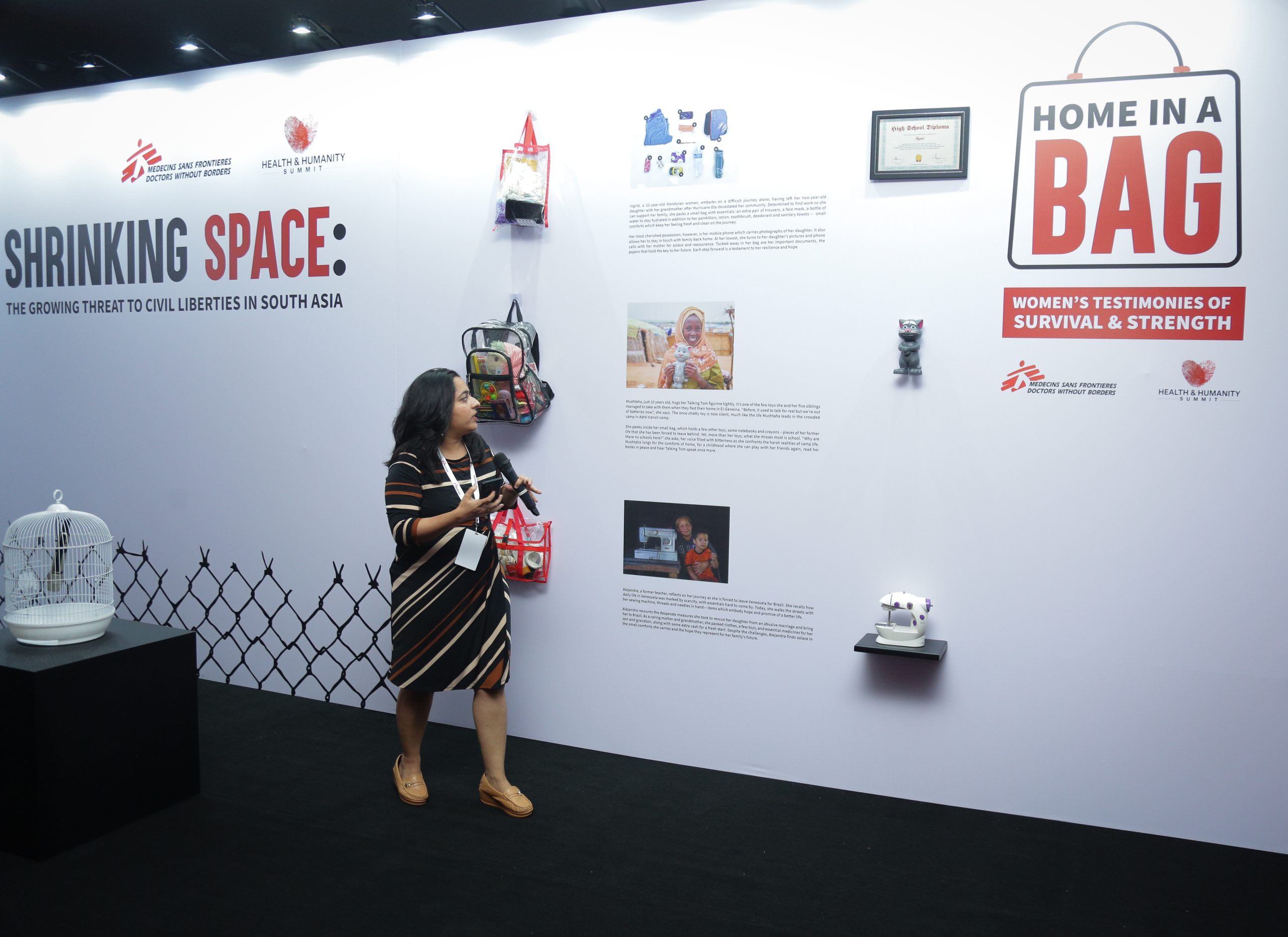
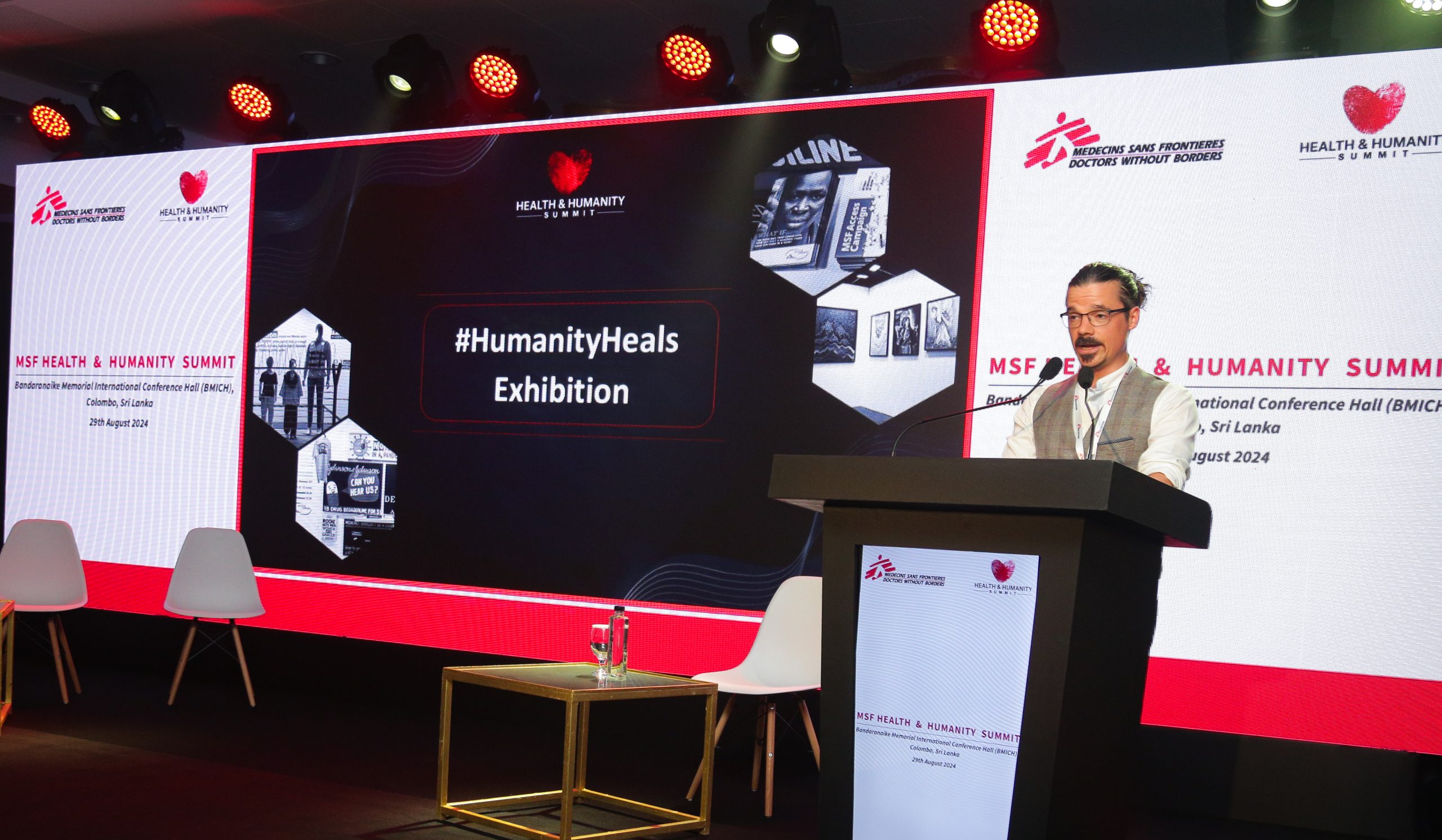
Humanity Heals is an exhibition that showcases humanitarian issues addressed during the summit through art. The show will serve as a visual journey for the audience. It will be highly curated and will use various installations to create an immersive and engaging experience for visitors. The installations will be engaging, thought-provoking, and inspiring. The exhibition aims to raise awareness about the importance of humanitarian aid and to inspire visitors to take action to support MSF’s work. The exhibit will showcase several installations revolving around the themes of People Forced from Home, Equitable Access to Healthcare, Climate Change and Mis/Disinformation in Emergencies. There will be three photography exhibits. Two of these will be co-curated by Alliance Francaise New Delhi, which are (1) ‘Memories of My Homeland’: A collection of painting and photographs from refugees and (2) a Photo collective on climate change-induced migration by Bangladeshi photographer Abir Abdullah. The third exhibit – ‘Side by Side’ presents a selection of collages by photographer Uğur Gallenkuş in collaboration with MSF. These are specially created for MSF, using original pictures from old and recent MSF archives. The side-by-side pictures portray starkly different realities. The association between MSF and Uğur Gallenkuş is meaningful in that it both conveys humanitarian messages and highlights the need to think and look beyond our usual environment in different ways.
To raise awareness around the misinformation and disinformation through the use of technology will be exhibited in the form of an interactive display by the Internet Freedom Foundation.
Co-Curator: Alliance Française de Delhi
About Alliance Française de Delhi (AFD):
Alliance Française de Delhi (AFD) is a prominent cultural institution located in Delhi, India. It is part of the worldwide network of Alliance Française existed in more than 138 countries, which is dedicated to promoting French language and culture around the world. AFD operates under the patronage of the French Embassy in India.
At the heart of Alliance Française de Delhi’s mission is the provision of French language courses for both adults and children. Their structured curriculum offers a range of proficiency levels, allowing students to embark on their French language journey from beginner to advanced stages. The courses are taught by qualified and experienced teachers who are native French speakers or have a high level of proficiency in the language
AFD serves as a cultural hub where people interested in French language and culture can come together, learn, and exchange ideas. It promotes cross-cultural understanding and upholds ties between India and France through its language programs and cultural activities.
Alliance Française de Delhi serves as a cultural hub where individuals with an interest in French language and culture can converge, learn, and exchange ideas. By promoting cross-cultural understanding, AFD plays a crucial role in nurturing ties between India and France through its language programs and diverse cultural activities.
Explore the profound impact of climate change on Bangladesh through the lens of acclaimed photographer Abir Abdullah. Bangladesh. With its low-lying terrain, Bangladesh faces an uphill battle against annual floods, cyclones, and unpredictable weather patterns. Witness how these environmental challenges force communities to become climate migrants, relocating repeatedly as the waters rise, leading to disputes over dwindling land resources. Abir Abdullah’s powerful photographs shed light on the human consequences of global warming, making Bangladesh a frontline in the battle against climate change.
Abdullah is an independent photographer, photo editor and educator who served as a correspondent at European Press Photo Agency (2005-2018). He was the Founding Partner of Drik News and Principal of Pathshala (2018-2020). His work has been published widely and he is the recipient of several prestigious awards.
The Migration and Asylum Project (MAP), an initiative of the Ara Trust, presents “Memories of my Homeland.” This remarkable exhibition features artworks by refugee artists Danyal Zaheer and Zohra Rezaie, capturing the spatial and imagined memories of their homelands. Through their art, they explore issues of identity, belonging, and displacement, sharing stories of the rich cultural heritage they bring with them to India. Witness the transformative power of art as these artists depict resilience amidst adversity and their journey to preserve and promote Afghan heritage.
Danyal Zaheer – Hailing from Afghanistan, Danyal’s artistic journey began with a passion for calligraphy and photography. In a country marred by conflict, art became his medium to channel intense emotions and make profound statements. With collaborations across various sectors, Danyal’s art embodies the shared pursuit of humanity’s interconnectedness.
Zohra Rezaie – Zohra, a 20-year-old artist and educator from Afghanistan, found solace in art amidst the turmoil of war. Her art celebrates Afghan heritage and history, bridging the gap between tradition and contemporary expressions. Through her work, Zohra aspires to preserve Afghan traditions and inspire appreciation for the beauty and creativity of her culture.
Side by Side, in collaboration with Médecins Sans Frontières (MSF), artist Uğur Gallenkuş presents “Side by Side.” This thought-provoking exhibition showcases collages juxtaposing starkly different realities. Using original pictures from old and recent MSF archives, Uğur Gallenkuş’s collages convey powerful humanitarian messages and encourage viewers to broaden their perspectives beyond familiar environments.
Join us at the Health & Humanity Summit, where art, culture, and global issues converge to inspire meaningful dialogue and positive change. Let us come together to foster compassion, understanding, and a shared commitment to a healthier and more humane world.
The Internet Freedom Foundation (IFF) is an award-winning and impact-focused digital rights organisation from India, formed from the SaveTheInternet movement. IFF’s mission is to advance and protect democratic freedoms for every Indian in a digital society.
https://internetfreedom.in
The humanitarian financing model is at an inflection point. Shifting aid budgets, debt pressures, and
geopolitical competition are prompting a long-overdue conversation about how the system is funded and
governed. Encouragingly, many Global South countries now finance more of their own healthcare than ever
before — a sign of growing capacity and ownership. The task ahead is to ensure decision-making power
evolves in step, so that priorities are shaped by equitable need and shared responsibility rather than political
visibility alone. The panel explores the growing role that wealthier Global South economies — Gulf states,
India, China, Singapore — can play in humanitarian governance, and what would make fuller participation
attractive and meaningful. The opportunity at stake is significant: a broader, more representative table for
setting priorities, and a future architecture of sovereignty, financing, and governance built by and for a wider
community of actors.
Health and humanitarian systems are powered by women’s labor — as doctors, nurses, community health
workers, and caregivers. This is one of the sector’s greatest strengths, and its fullest potential is yet to be
realized: women remain underrepresented in leadership and decision-making, and their work is too often
framed as service or sacrifice rather than the skilled, political labor it is. India’s ASHA workers, for instance,
proved indispensable during COVID-19 — a powerful demonstration of what community health leadership can
achieve, and a compelling case for the recognition and investment that should follow. Expanding access to
education and public participation, including in contexts such as Afghanistan, is central to strengthening the
long-term resilience of the systems women sustain. The panel examines the political economy of care work
and asks how humanitarian and health systems can harness this expertise fully: who defines priorities, whose
knowledge counts, and what more equitable models of leadership and labor look like in practice.
COVID-19 made clear that access to medicines, diagnostics, and vaccines is a political choice as much as a
scientific one — and, equally, that political choices can widen access dramatically when solidarity leads. This
recognition has moved health sovereignty to the center of global health debates, understood not as isolation
or self-sufficiency but as the capacity to cooperate, share knowledge, and build regional manufacturing while
staying connected to global research and solidarity. Traditional South–South solidarity, rooted in shared
history, is being renewed and reimagined for a new era of economic dynamism and evolving alliances. This
panel will examine intellectual property, technology transfer, and regional manufacturing, and chart the forms
of international cooperation best placed to support resilient, equitable health systems that are both selfreliant
and outward-looking.